Pepa Bueno wears Silvia Fernández at the Princesa Awards in Asturias
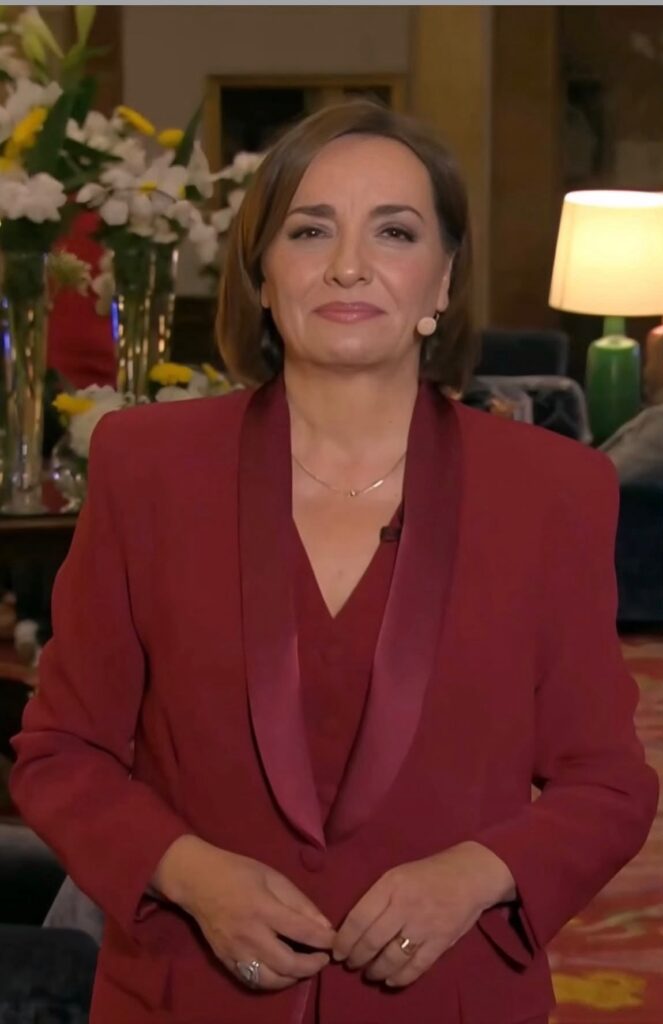
Pepa Bueno has chosen a design by Silvia Fernández to present the Princesa Awards gala in Asturias, held on 23 October. The journalist has opted for a ceremony trouser suit, an elegant alternative to a long dress. A trouser suit can be an alternative to a long dress when you are looking for a occasionwear outfit with a more structured, modern feel. The decision is not about replacing one garment with another, but about considering the complete look: what the invitation calls for, how much of a statement the fabric will make and how the accessories will complement it. In our approach to occasionwear, these choices matter just as much as the main garment.
Pepa Bueno’s look at the Princesa Awards in Asturias
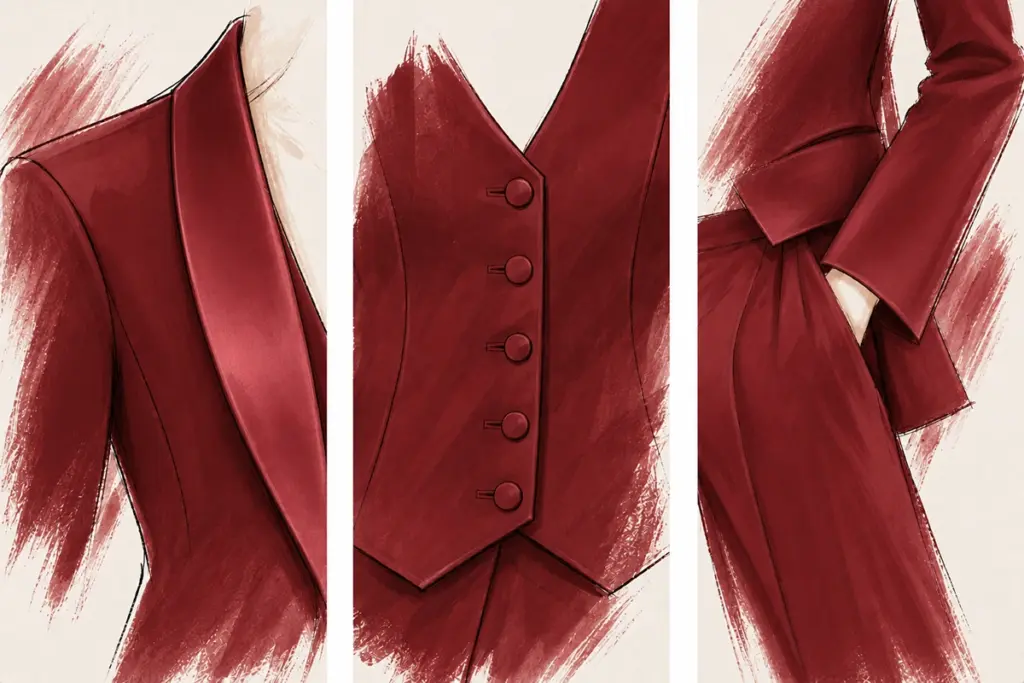
Pepa Bueno wore an elegant bespoke trouser suit in burgundy, made from crepe and satin. It comprises a fitted jacket with satin lapels, a V-neck waistcoat with covered buttons, and high-waisted, wide-leg trousers. The result is a look that combines matte crepe with satin lapels, bringing together a fitted jacket, a V-neck waistcoat and wide-leg trousers in a sophisticated, feminine and modern design.
A trouser suit or a long dress for a ceremony?
Before choosing, it is worth distinguishing between a formal celebration and an invitation that specifies a particular dress code. We do not recommend interpreting every gala event in the same way. Check the organiser’s guidance and, if in any doubt, ask before deciding what to wear. Then think about the look you want to achieve. Evening dresses and trouser suits offer different style possibilities. If you are drawn to a look built from several pieces, a jacket and waistcoat can provide an interesting starting point. If you would rather let a single piece take centre stage, you could opt for a dress. It is not a question of deciding which is more elegant, but of considering which option suits the celebration and your own way of dressing.
The essentials of putting together an outfit for a ceremony
The essentials of putting together an outfit for a ceremony
When trying on a suit, consider how its pieces work together. See how it looks with the jacket buttoned and unbuttoned, and decide whether both versions create the image you want. Do not assume a combination works simply because you like each piece on its own.
Our advice is simple: think about how it moves, too. Walk, sit down and see how you feel in the outfit before making a decision.
Fabric: deciding where you want the contrast
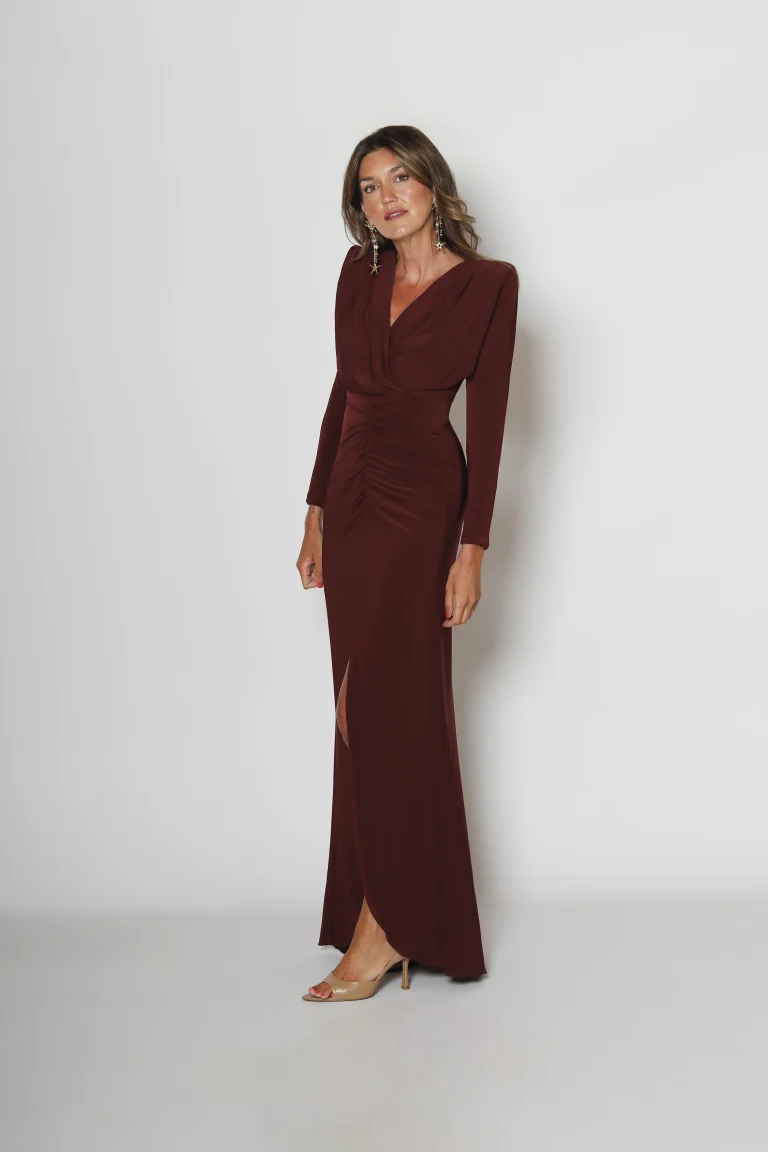
The outfit worn by Pepa Bueno is a good example: crepe creates a matte, understated finish, while satin lapels introduce a subtle contrast of sheen against the burgundy. Combining matte and satin finishes can be an effective styling choice. If you are drawn to this visual contrast, consider which part of the outfit you want to highlight and avoid adding other elements that compete without purpose. Rather than seeking shine for its own sake, we recommend considering how it works with the rest of the pieces. The useful question is what each finish brings to the overall look.
Colour: choosing with your accessories in mind
Don’t decide on the colour in isolation. Try the combination with the shoes, bag and jewellery you’re considering. This will help you decide whether you’d prefer to maintain a harmonious colour palette or introduce a particular contrast. The same check is useful when choosing elegant occasion dresses: an outfit that appeals to you on its own should still do so once you’ve completed the look.
How to incorporate a waistcoat without overloading your look
A waistcoat adds another piece to the outfit and deserves careful consideration. Check which parts will be visible beneath the jacket and how the overall look changes when it is open.
If you want it to take centre stage, you can tone down the other elements. There’s no need to add a statement accessory to every part of your look: choosing what to highlight also means deciding what to keep in the background.
Five tips for dressing elegantly for an evening wedding or ceremony
1. Start with the invitation. Check the context and dress code before falling in love with a particular option.
2. Choose a main focus. It could be the fabric, colour or composition of the garments. Use it to guide your other decisions.
3. Try on the complete look. Include the accessories you have in mind so you can assess the real result, rather than an incomplete version.
4. Check how comfortable it is to move in. Spend a few minutes walking and sitting down; your choice shouldn’t depend solely on how you look in the mirror.
5. Compare without accumulating. Try different accessories one at a time. That way, you’ll identify which ones add something and which you can rule out.
From suit to dress: find your starting point
If, after comparing, you would prefer a single garment, you can explore our occasion and guest dresses. You can start with the same approach: decide what you want to highlight, then build the rest of your look around it.
To take the next step, visit our stockists and find out more about our occasionwear. Whether you’re drawn to a dress or considering other options for a special occasion, bring an idea of the event and the accessories you have in mind: it will help you compare the options more clearly.